



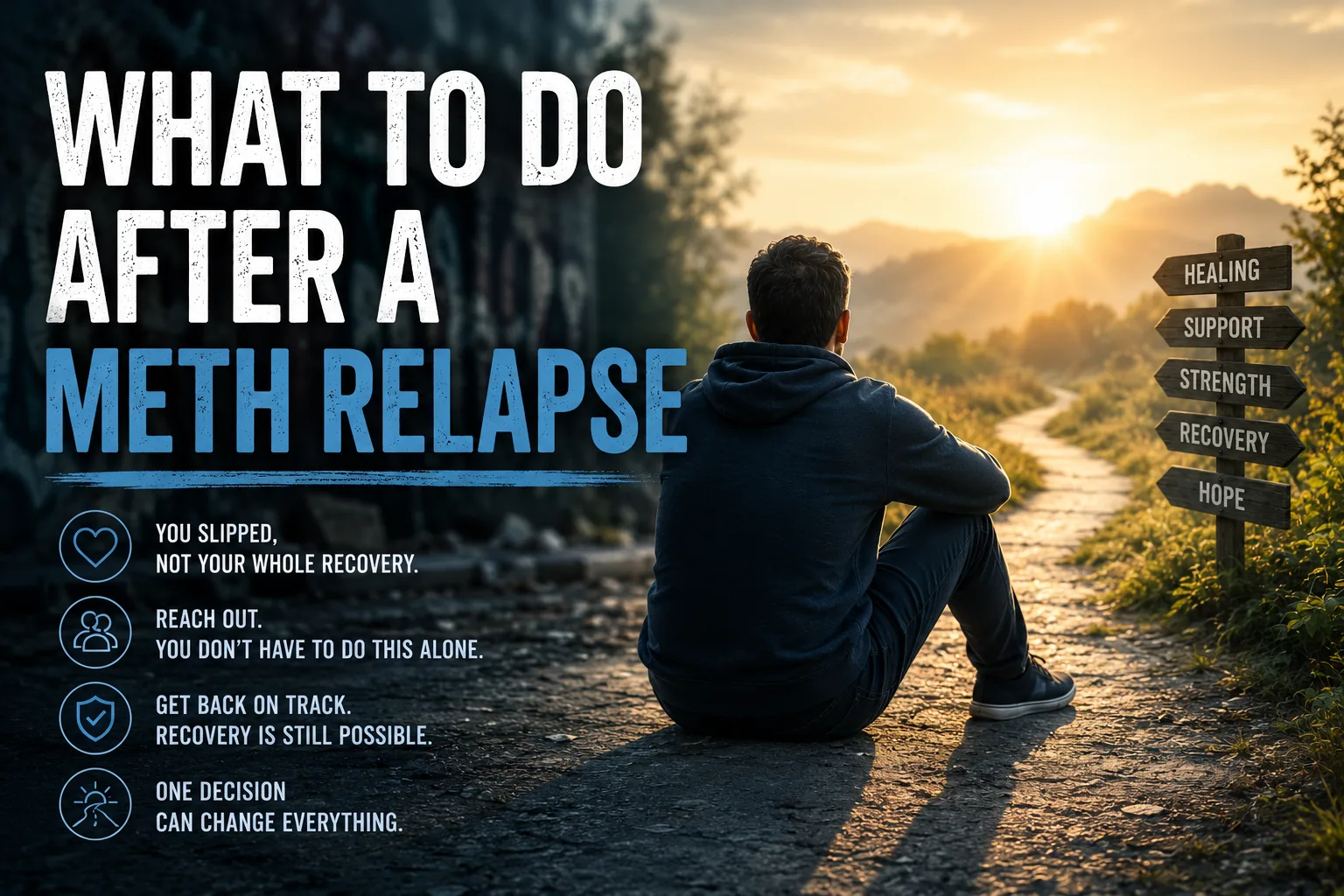


A meth relapse can bring fear, shame, exhaustion, and the feeling that everything you accomplished in recovery has disappeared. It has not. What matters now is stopping the return to methamphetamine from becoming a longer binge and getting the right support as quickly as possible.
Relapse can be a sign that something in the recovery plan needs to change. The National Institute on Drug Abuse (NIDA) explains that returning to drug use does not automatically mean treatment failed; treatment may need to be resumed, modified, or intensified.
The first hours after meth use matter. Focus on safety first, then recovery.
First, Make Sure You Are Medically Safe
Methamphetamine is a powerful stimulant that can sharply increase heart rate, blood pressure, body temperature, and agitation. A serious meth reaction or overdose can cause chest pain, irregular heartbeat, seizures, extreme overheating, paranoia, stroke, difficulty breathing, or loss of consciousness.
Call 911 immediately if you or someone else experiences:
- Severe chest pain
- Difficulty breathing
- A seizure
- Loss of consciousness
- Extreme overheating
- Severe confusion
- Dangerous agitation or violent behavior
- Symptoms of a stroke
- An irregular or stopped heartbeat
Do not assume that severe paranoia or hallucinations will simply disappear after someone sleeps. Methamphetamine can cause significant psychiatric symptoms, including extreme paranoia, delusions, agitation, and psychosis.
If the person is extremely paranoid or agitated, avoid arguing with them or trying to physically restrain them unless immediate safety requires intervention. Keep the environment as calm as possible and seek professional medical help.
Tell Someone About the Relapse
Once the immediate medical danger has passed, one of the most important things you can do is tell someone what happened.
Call your counselor, sponsor, recovery coach, treatment center, sober friend, or trusted family member.
You do not need to have an explanation ready.
Say:
“I used meth again. I don’t want this to turn into a full relapse, and I need help.”
Secrecy creates an environment where a brief return to meth can become several days of use. Addiction often thrives when someone isolates, stops attending treatment, and convinces themselves they will handle the problem alone.
NIDA notes that common relapse triggers include stress, moods, people, places, and exposure to drugs. Identifying those triggers and developing new ways to cope with them is an important part of addiction treatment.
Get Away From Meth and the People Connected to It
Make the next use harder.
Delete or block dealer contacts. Leave environments where meth is available. Avoid people who are currently using. If you have meth or paraphernalia nearby, get away from the situation and involve a trusted person in making your environment safer.
Then ask yourself what happened before the relapse.
Were you:
- Sleeping poorly?
- Feeling depressed or lonely?
- Under extreme stress?
- Fighting with someone?
- Missing treatment?
- Spending time around people who use?
- Thinking positively about your old meth use?
- Experiencing stronger cravings?
- Keeping problems secret?
Do not ask these questions to punish yourself. The goal is to find the weak point in your relapse-prevention plan.
If loneliness was the trigger, you may need more connection. If cravings were becoming stronger, treatment may need to become more intensive. If you stopped attending appointments, reconnect with treatment immediately.
Expect a Crash After Meth Use
After the stimulant effects wear off, people may experience exhaustion, sleep changes, depressed mood, irritability, anxiety, and powerful cravings. These symptoms can make someone vulnerable to using again simply to escape the crash.
This is a dangerous cycle: meth creates energy and stimulation, followed by exhaustion and distress, which may create another urge to use.
During this period, prioritize basic stability. Stay somewhere safe. Eat regular meals if you can. Drink fluids normally. Allow yourself to sleep, and stay connected with supportive people.
Pay close attention to severe depression, paranoia, hallucinations, or suicidal thinking. Those symptoms need professional attention rather than isolation.
Reconnect With Meth Addiction Treatment Quickly
Do not wait until another binge occurs.
Methamphetamine use disorder responds to behavioral treatment, and one of the strongest approaches is contingency management. This treatment provides incentives for measurable recovery behaviors, such as treatment participation or drug-negative tests. NIDA identifies contingency management as especially effective for stimulant addictions such as methamphetamine and cocaine.
Other treatment may include:
- Cognitive behavioral therapy
- Intensive outpatient treatment
- Residential treatment
- Individual counseling
- Group treatment
- Peer-recovery support
- Recovery housing
- Mental health treatment
- Relapse-prevention planning
SAMHSA’s treatment guidance for stimulant use disorders also emphasizes evidence-based behavioral approaches for cocaine and amphetamine-type stimulant problems.
The FDA continues to encourage development of medications specifically for methamphetamine and other stimulant use disorders, including through updated 2026 guidance for clinical drug development.
Researchers have found promising results with certain medication combinations. An NIH-supported trial found that injectable naltrexone combined with oral bupropion helped some adults with moderate or severe methamphetamine use disorder reduce their meth use.
Medication decisions should be made with a qualified healthcare professional rather than attempted independently.
Remember the Risk of Fentanyl
A person who intends to use methamphetamine may also be exposed to opioids.
CDC guidance notes that methamphetamine and cocaine can sometimes be mixed with fentanyl. If an opioid is unexpectedly present, naloxone can reverse the opioid component of an overdose.
Keep naloxone available when there is any possibility of opioid exposure.
If someone becomes unconscious, has very slow or stopped breathing, makes choking or gurgling sounds, or cannot be awakened, give naloxone if available and call 911. Naloxone is safe to administer even when you are unsure whether opioids are involved.
A Meth Relapse Does Not Erase Your Recovery
The most dangerous response to relapse may be thinking:
“I already blew it, so I might as well keep going.”
You do not have to.
The months or years you spent in recovery still happened. You still learned coping skills. You still built relationships. You still proved that you can live without meth.
Now you have new information about where your recovery needs more protection.
Tell someone what happened. Get medical help when necessary. Separate yourself from meth and the people connected to it. Return to treatment. Identify the trigger and strengthen your relapse-prevention plan.
A meth relapse is serious, but it does not have to become a return to active addiction.
What happened yesterday matters less than what you do next. Recovery can continue from here.


