



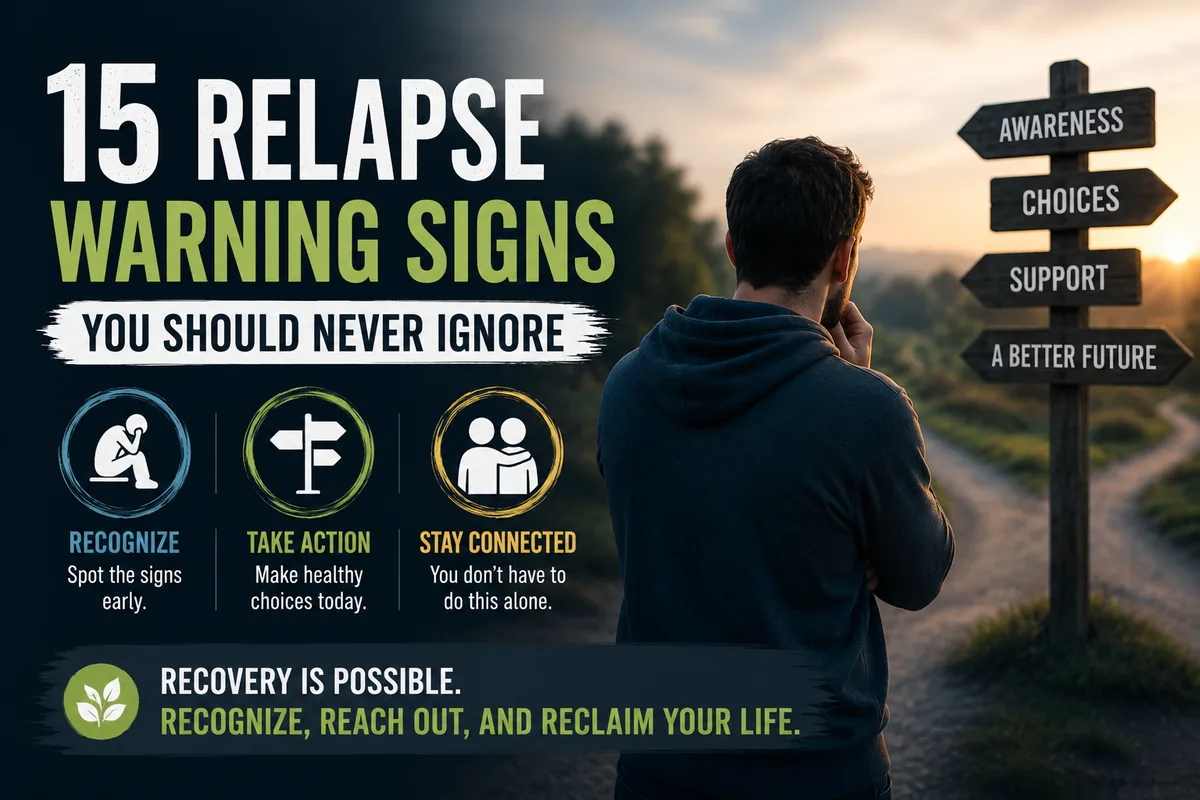


Relapse warning signs often appear before someone returns to alcohol or drugs. A person may start withdrawing from support, neglecting recovery routines, romanticizing past substance use or exposing themselves to old triggers. These changes can develop over days, weeks or even months.
Relapse is not always a sudden decision. It is often a gradual process involving emotional, mental and behavioral changes. Recognizing the signs early creates time to strengthen treatment and possibly prevent physical substance use.
One warning sign does not prove that a relapse will happen. However, several changes appearing together should never be ignored.
Early Emotional Relapse Warning Signs
1. Withdrawing from supportive people
Isolation is one of the most important warning signs. Someone may stop answering calls, avoid family members or spend more time alone. Isolation removes the people who might notice that something is wrong.
2. Skipping counseling or recovery meetings
Missing one appointment may happen for many reasons. Repeatedly skipping therapy, support groups or check-ins can indicate that recovery is becoming less of a priority. Reduced contact with treatment also leaves cravings and emotional problems unaddressed.
3. Neglecting basic self-care
Poor hygiene, irregular meals, inactivity and a disorganized living space may signal emotional distress. Self-care supports physical and mental stability. When it disappears, the person may become more vulnerable to stress and impulsive decisions.
4. Major changes in sleep
Insomnia, staying awake all night, sleeping throughout the day or constantly feeling exhausted can weaken judgment and emotional control. Sleep problems may also be connected with withdrawal symptoms, depression, anxiety or other mental health concerns.
5. Increased anger, anxiety or depression
Mood swings, hopelessness, irritability and frequent emotional outbursts can appear during emotional relapse. Mental health and substance use problems often affect each other, so worsening symptoms deserve professional attention.
6. Feeling constantly overwhelmed
Stress can play an important role in relapse. Someone may begin saying that recovery is too difficult, nothing is helping or substance use is the only way to get relief.
Mental and Behavioral Warning Signs
7. Romanticizing past substance use
A person may begin remembering the parties, excitement or temporary relief while forgetting the overdoses, damaged relationships, legal problems or health effects. This selective memory can make returning to use seem safer than it really is.
8. Minimizing the consequences of addiction
Statements such as “It was never that bad” or “Everyone overreacted” can signal a change in thinking. Minimizing the past weakens the reasons someone had for entering recovery.
9. Becoming overconfident
Confidence can support recovery, but overconfidence can create danger. Someone may decide that treatment is no longer needed or that they are now strong enough to spend time around drugs and alcohol.
10. Cravings become stronger or more frequent
Occasional thoughts about substances can occur during recovery. The risk increases when these thoughts become more intense, frequent or difficult to dismiss. A major warning sign is when thoughts shift into detailed plans.
11. Reconnecting with people connected to past use
Calling former dealers, spending time with friends who still use or following old contacts online can increase exposure to substances. The person may claim they only want friendship, but the situation can quickly activate cravings and old habits.
12. Returning to high-risk places
Bars, clubs, neighborhoods, hotels, parties and other locations can become powerful addiction triggers. Drug-related memories and environmental cues may continue to create relapse vulnerability even after long periods of recovery.
13. Becoming secretive or dishonest
Someone may hide where they have been, delete messages, lie about money or become defensive when asked simple questions. Secrecy allows relapse planning to continue without interruption.
14. Stopping medication or ignoring the treatment plan
A person may stop taking prescribed medication, cancel appointments or decide to manage recovery alone. Medications are evidence-based treatment options for opioid and alcohol use disorders and can help control cravings, support recovery and reduce overdose risk.
15. Bargaining, testing or planning substance use
This is one of the clearest danger signs. A person may say:
- “I will only use once.”
- “I can drink on vacation.”
- “I’ll only use when nobody is around.”
- “I can handle a smaller amount.”
- “I just want to prove I can be near it.”
At this point, mental relapse may be moving toward physical relapse. Immediate support is needed.
What to Do When You Notice These Signs
Do not wait until someone uses a substance to take action. Contact a counselor, recovery coach, sponsor, treatment provider or trusted family member. Be direct about what is happening.
A person can say:
“I have noticed my cravings getting stronger, and I have started thinking about using. I need help changing my plan.”
Helpful next steps may include:
- Increasing counseling or support-group attendance
- Reviewing personal triggers
- Removing access to alcohol or drugs
- Avoiding high-risk people and places
- Restarting healthy sleep and eating routines
- Reviewing medications with a clinician
- Considering intensive outpatient or residential treatment
- Keeping naloxone available when opioid use is possible
A return to use does not mean that treatment has failed. NIDA explains that relapse can be a sign that treatment should be resumed, changed or made more intensive. However, relapse involving opioids can be deadly because tolerance may have decreased during recovery.
Call 911 when someone cannot be awakened, is breathing slowly or not at all, has blue or gray lips, experiences a seizure or shows signs of a medical emergency. Give naloxone when an opioid overdose may be involved.
Relapse warning signs are not reasons for shame. They are signals that something needs attention. Recognizing them early, speaking honestly and reconnecting with treatment can help someone protect the recovery they have already built.


