




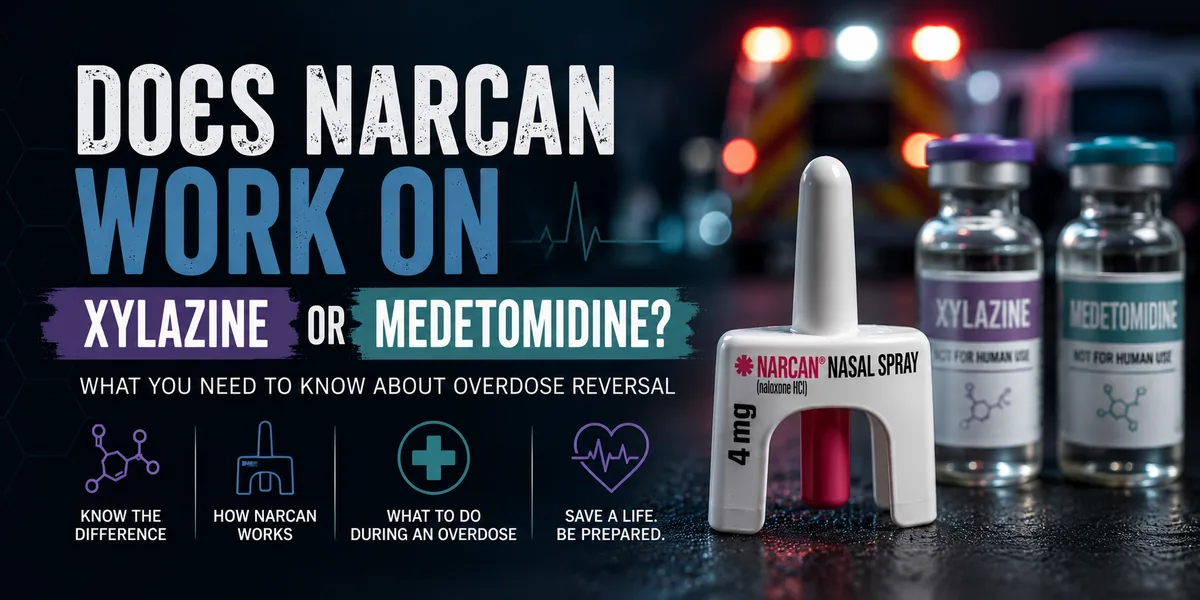
Narcan does not directly reverse xylazine or medetomidine. Narcan is a brand name for naloxone, a medication designed to reverse an opioid overdose. Xylazine and medetomidine are nonopioid sedatives, so naloxone cannot block their effects. However, Narcan should still be given during a suspected overdose because both sedatives are commonly found in illegal fentanyl products. Naloxone may reverse the fentanyl and restore breathing even when the person remains deeply sedated from xylazine or medetomidine.
How Narcan Works During an Overdose
Naloxone is an opioid antagonist. It temporarily blocks opioids from attaching to receptors in the brain and can restore breathing when fentanyl, heroin or another opioid has slowed or stopped it. It usually begins working within two to three minutes, although stronger opioids such as fentanyl may require more than one dose.
Narcan does not act as a general antidote for every drug. It will not reverse overdoses caused only by cocaine, methamphetamine, benzodiazepines, xylazine or medetomidine. Still, naloxone is considered safe to administer when the substance involved is uncertain. The CDC advises giving it whenever opioid exposure is possible because it will not harm someone whose overdose does not involve an opioid.
That distinction is critical in today’s unpredictable drug supply. A person may believe they used heroin, fentanyl or a counterfeit prescription pill without knowing that it also contained xylazine, medetomidine or another sedative.
Does Narcan Work on Xylazine?
Xylazine, sometimes called “tranq,” is a veterinary sedative that is not approved for human use. It can cause prolonged sedation, slow breathing, dangerously low blood pressure and a reduced heart rate. There is currently no approved reversal agent for xylazine exposure in humans.
Naloxone will not remove xylazine from the body or directly reverse its sedating effects. The FDA warns that people exposed to fentanyl mixed with xylazine may show only a partial response to naloxone. A person’s breathing may improve after the fentanyl is reversed, but they may remain difficult to wake because the xylazine is still active.
This does not mean giving Narcan was pointless. Fentanyl is often present in xylazine-involved overdoses, and reversing the opioid portion may be what keeps the person breathing until emergency help arrives. The effects of xylazine can continue after naloxone, which is why calling 911 and supporting breathing are essential.
Does Narcan Work on Medetomidine?
Medetomidine is another veterinary sedative increasingly detected in illegal fentanyl. It is an alpha-2 adrenergic agonist that can cause deep or prolonged sedation and a dangerously slow heart rate. It is not approved for human use.
Naloxone does not reverse medetomidine because medetomidine does not act through opioid receptors. In a Chicago overdose cluster, fentanyl was found in every tested blood specimen and drug sample that contained medetomidine. Most confirmed patients experienced only partial or no improvement after naloxone, and many had a slow heart rate and continued altered awareness.
Even so, the CDC continues to recommend naloxone for suspected medetomidine-involved overdoses because fentanyl is usually involved. Narcan can reverse the breathing suppression caused by the opioid, while emergency clinicians provide respiratory and cardiovascular support for the remaining medetomidine effects.
A veterinary medication called atipamezole can reverse medetomidine in animals, but it is not FDA-approved for humans. Using it in a person who has become dependent on medetomidine could also trigger dangerous withdrawal, including severe hypertension and a racing heart. It should never be treated as a home overdose remedy.
What to Do During a Suspected Overdose
Call 911 immediately when someone cannot be awakened, has slow or stopped breathing, makes choking or gurgling sounds, or develops blue, gray or unusually pale lips and skin.
Give one dose of Narcan or another naloxone product if it is available. If normal breathing has not returned after two to three minutes, give another dose according to the package instructions. Strong fentanyl exposure may require multiple doses.
Try to keep the airway open and support breathing. Rescue breaths are especially important when xylazine may be involved because naloxone cannot reverse xylazine-related sedation. If trained—or guided by a 911 dispatcher—give two slow breaths and then approximately one breath every five seconds, watching for the chest to rise. Begin CPR if the person has no pulse and you know how to perform it.
Place the person on their side when they begin breathing independently to reduce the risk of choking. Stay with them until emergency responders arrive. Do not put them in a shower, force them to walk, give them food or drinks, or assume they can safely “sleep it off.”
Why Someone May Remain Unconscious After Narcan
Naloxone’s immediate goal is to restore breathing—not necessarily to make someone fully alert. When fentanyl is mixed with xylazine or medetomidine, breathing may improve while deep sedation continues.
Persistent unconsciousness can also mean that the opioid dose was very large, additional naloxone is needed, another sedative is involved or the person has suffered a separate medical emergency. Only emergency professionals can safely evaluate those possibilities.
Medetomidine exposure creates another concern after overdose reversal. A person with repeated exposure may develop severe withdrawal involving a rapid heartbeat, dangerously high blood pressure, shaking, chest pain, changing alertness and uncontrollable vomiting. These symptoms can escalate quickly and may require intensive care.
The simplest answer is that Narcan does not work directly on xylazine or medetomidine—but it should still be given. In a mixed overdose, reversing the hidden fentanyl may save the person’s life while rescue breathing and emergency medical care address everything naloxone cannot.


