





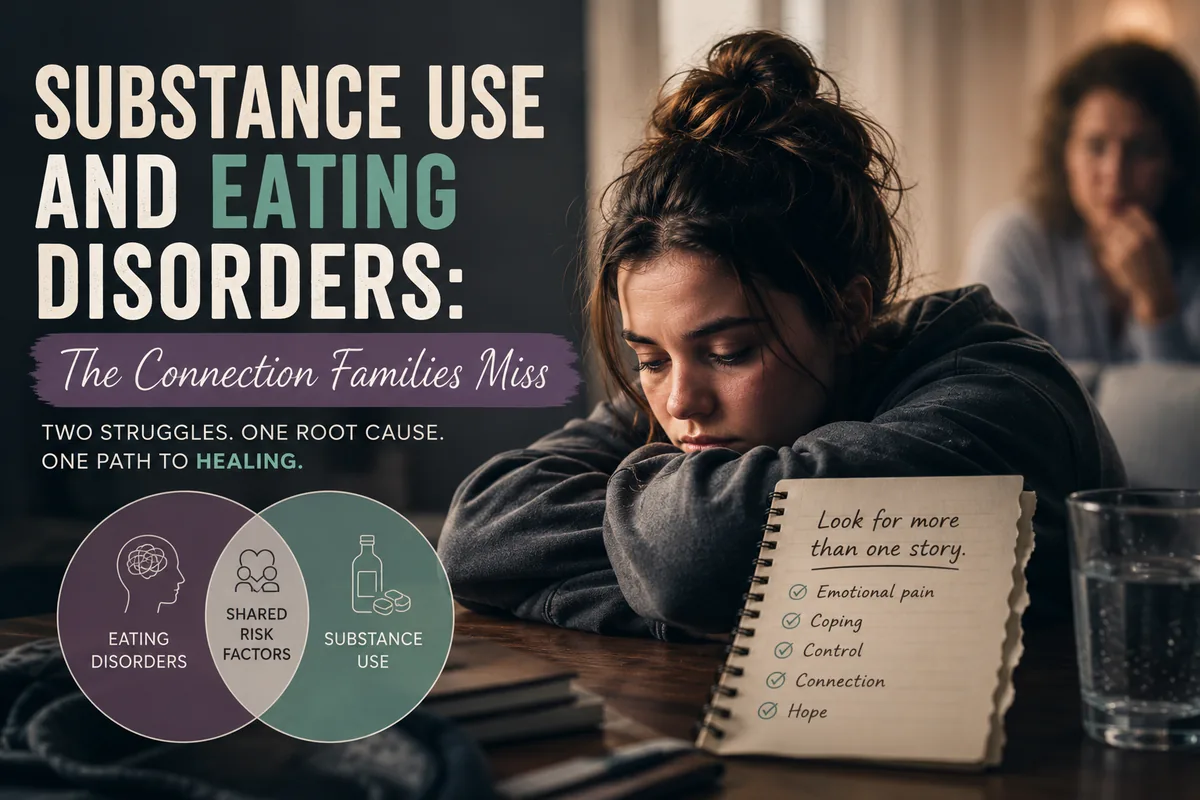
Eating disorders and substance abuse often appear together, but families may notice only one side of the problem. A loved one’s drinking, stimulant use, or misuse of medications may seem like the main concern, while secretive eating, purging, fasting, or compulsive exercise goes unnoticed. The reverse can also happen. A family may focus on food and weight without recognizing the growing substance use underneath. This connection between addiction and disordered eating matters because treating only one condition can leave the other free to become worse.
In January 2026, the Substance Abuse and Mental Health Services Administration released updated guidance urging providers to screen for and address both conditions. SAMHSA reports that more than one in four people with an eating disorder will also meet the criteria for a substance use disorder at some point.
Why Eating Disorders and Substance Abuse Often Occur Together
Eating disorders and substance use disorders may look different, but they share several features. Both can involve cravings, compulsive behavior, loss of control, secrecy, shame, and continuing a behavior despite serious consequences.
They may also develop from some of the same risk factors. SAMHSA identifies genetics, brain responses, trauma, adverse childhood experiences, family influences, and cultural pressure as possible contributors to both disorders. Brain systems involved in reward, stress, impulse control, and decision-making may play a role as well.
Some people use alcohol or drugs to cope with painful emotions, body dissatisfaction, trauma, anxiety, or depression. Others use substances as part of the eating disorder itself. For example, someone may misuse stimulants, nicotine, laxatives, diuretics, or diet pills to reduce appetite or control weight.
Alcohol may lower inhibitions and make binge eating or purging more likely. A person may also drink to numb guilt after eating or to escape distress about their body. Over time, each condition can strengthen the other.
The connection is not limited to one type of eating disorder. NIMH data show that substance use disorders have occurred among people with anorexia nervosa, bulimia nervosa, and binge-eating disorder. Lifetime substance use disorder rates in one national survey were 27% for anorexia, 36.8% for bulimia, and 23.3% for binge-eating disorder.
Warning Signs Families May Overlook
A person does not have to appear extremely thin to have an eating disorder. Someone with bulimia may remain at an average or higher weight, and a person can experience severe restriction or rapid weight loss without looking underweight. Relying on appearance alone can delay care.
Warning signs of addiction and disordered eating may include:
- Frequently skipping meals, fasting, or following rigid food rules
- Binge eating, hiding food, or eating alone because of shame
- Going to the bathroom immediately after meals
- Misusing laxatives, diuretics, stimulants, or weight-loss products
- Exercising excessively despite illness, injury, or exhaustion
- Major weight changes or repeated weight fluctuations
- Obsessively discussing calories, weight, body shape, or “clean” eating
- Drinking or using drugs before or after eating
- Hiding bottles, pills, food wrappers, or financial purchases
- Dizziness, low energy, fainting, stomach problems, or sleep changes
- Becoming defensive when asked about eating or substance use
Food rituals may also be a warning sign. These can include cutting food into tiny pieces, eating foods in a strict order, chewing excessively, or rearranging food without eating it. Physical clues may include dental erosion, bleeding gums, brittle nails, thinning hair, or calluses on the knuckles from self-induced vomiting.
These behaviors should be viewed as signals of distress—not manipulation or attention-seeking.
Why Both Conditions Must Be Identified
Symptoms can overlap, which makes diagnosis difficult. Weight loss may be caused by stimulant use, food restriction, depression, illness, or more than one condition. Fatigue, mood changes, isolation, and stomach problems can also occur with both eating disorders and substance use.
That is why a complete evaluation matters. Providers should ask about alcohol and drug use, eating patterns, body image, exercise, purging, supplements, diet pills, laxatives, and prescription medications. Screening should continue throughout recovery because eating-disorder symptoms may become more visible after substance use stops.
SAMHSA warns that people treated for only one condition may shift between harmful behaviors. Someone who stops using drugs may begin restricting food more intensely. Another person may reduce bingeing or purging but increase alcohol use to manage emotions. Treating one symptom without addressing the shared drivers can increase the risk of relapse.
The immediate danger must come first. Severe intoxication, overdose, alcohol or drug withdrawal, major dehydration, electrolyte imbalance, fainting, heart problems, or suicidal thoughts may require emergency stabilization. After that, both conditions should be addressed through coordinated care.
What Integrated Treatment Can Include
Ideally, treatment involves a team with experience in both substance use and eating disorders. The team may include a physician, addiction professional, eating-disorder specialist, therapist, psychiatrist, and registered dietitian.
Treatment may involve medical monitoring, nutritional support, cognitive behavioral therapy, dialectical behavior therapy, medications when appropriate, peer support, and family-based treatment—particularly for adolescents. SAMHSA notes that dialectical behavior therapy may be useful because both conditions can involve emotional dysregulation, distress intolerance, and impulsive behavior.
Families can help by speaking calmly and focusing on behaviors rather than appearance. Avoid comments about weight, body size, or willpower. Try saying, “I’ve noticed you seem exhausted and anxious around food, and I’m also concerned about your drinking. I care about you and want to help you find support.”
Eating disorders are serious and can be fatal, but recovery is possible. Early identification improves the chance of recovery, and integrated treatment prevents one condition from remaining hidden behind the other.
When eating disorders and substance abuse occur together, families should not have to decide which problem is “real.” Both are real, both deserve compassionate treatment, and both must be addressed for lasting recovery.


