



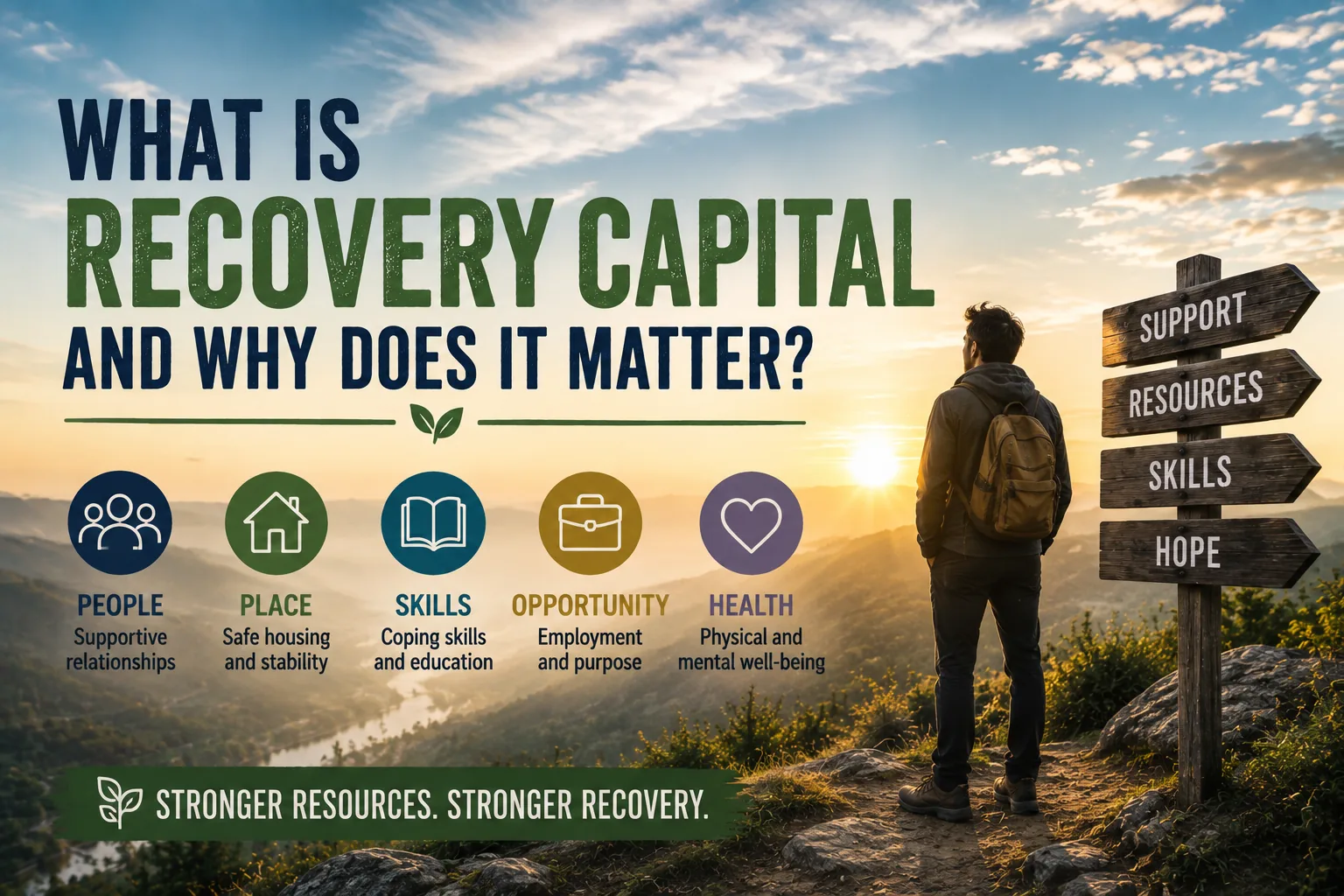


Recovery capital is the collection of resources, relationships, skills, and supports that help a person begin and maintain recovery from addiction. If you have ever wondered what recovery capital means, think of it as everything a person can draw on to help them stay stable, make healthier choices, and keep moving forward.
Recovery capital is not just money.
It can include a safe place to live, supportive family members, a job, transportation, access to treatment, sober friends, coping skills, spiritual beliefs, confidence, and a sense of purpose.
The more recovery capital someone has, the more support they may have when life becomes difficult.
This matters because addiction recovery does not happen in isolation. Someone may be highly motivated to stay sober, but motivation alone can be tested by homelessness, unemployment, family conflict, untreated mental health problems, loneliness, or constant exposure to drugs and alcohol.
Recovery capital helps create a stronger foundation.
What Does Recovery Capital Mean?
Recovery capital is often divided into several areas.
Personal recovery capital includes the strengths and resources within the individual.
This may include:
- Coping skills
- Emotional stability
- Physical health
- Education
- Job skills
- Self-confidence
- Problem-solving ability
- Motivation
- Knowledge about addiction and recovery
Someone in early recovery may still be developing many of these skills.
That is normal.
Treatment can help people learn how to recognize triggers, manage cravings, communicate more effectively, and make decisions without relying on drugs or alcohol.
Over time, these skills become part of someone’s recovery capital.
Social Recovery Capital
Nobody recovers completely alone.
Social recovery capital refers to the people and relationships that support recovery.
This may include:
- Family
- Sober friends
- Sponsors
- Recovery coaches
- Peer-support groups
- Counselors
- Treatment providers
- Faith communities
- Supportive coworkers
Healthy relationships can provide encouragement, accountability, advice, and help during difficult moments.
For example, someone experiencing a strong craving at midnight may have very different outcomes depending on whether they have three supportive people they can call or nobody at all.
That is recovery capital in action.
Building a sober support network can therefore become one of the most important parts of addiction recovery.
Community Recovery Capital
The environment around someone can either support recovery or make it much harder.
Community recovery capital includes resources available through neighborhoods, organizations, healthcare systems, and communities.
Examples may include:
- Addiction treatment programs
- Recovery meetings
- Sober living homes
- Mental health services
- Employment programs
- Transportation
- Healthcare
- Educational opportunities
- Community centers
- Recovery-friendly employers
Imagine two people leaving rehab with the same motivation.
One returns to safe housing, supportive family members, transportation, a job, and nearby recovery meetings.
The other returns to unstable housing where drugs are being used, has no transportation, no employment, and little access to treatment.
Those two people may want recovery equally badly.
But they do not have the same recovery capital.
This is one reason life after rehab requires more than simply telling someone to “stay strong.”
People need practical support.
Why Recovery Capital Matters
Recovery becomes easier to protect when someone has multiple sources of support.
Problems will happen.
A job can be lost.
A relationship can end.
Someone can become sick.
A loved one can die.
Stress can increase without warning.
If a person’s entire recovery depends on only one thing, losing that one thing can create serious risk.
Recovery capital creates layers of protection.
If work becomes stressful, someone still has meetings.
If a relationship ends, they still have sober friends.
If cravings increase, they still have treatment.
If housing becomes unstable, they may have community resources.
This does not guarantee that relapse will never happen.
But it gives someone more options when problems appear.
That is why building recovery capital can be an important part of a relapse prevention plan.
Recovery Capital Can Grow Over Time
One of the most hopeful things about recovery capital is that it is not fixed.
Someone can begin recovery with very little and gradually build more.
A person may enter treatment unemployed, financially unstable, disconnected from family, and unsure how to live sober.
Six months later, they may have a sponsor, part-time job, sober living arrangement, regular counseling appointments, and a few trusted friends.
A year later, they may have their own apartment, repaired family relationships, savings, steady employment, and a strong recovery community.
That is recovery capital growing.
Small improvements matter.
Getting a driver’s license back can increase independence.
Finding stable housing reduces daily stress.
Repairing one relationship creates connection.
Learning one healthy coping skill gives someone another option during a craving.
Getting consistent sleep can improve emotional stability.
Recovery is often built through these ordinary changes.
How Can You Build Recovery Capital?
Start by looking honestly at what is strong and what is missing.
Ask yourself:
Who can I call when I am struggling?
Is my living environment safe for recovery?
Do I have access to treatment?
Do I have healthy ways to manage stress?
Am I financially stable enough to meet basic needs?
Do I have relationships that support sobriety?
What gives my life meaning?
You do not need perfect answers.
The goal is to identify weak areas and strengthen them over time.
If your social network is weak, begin attending recovery groups.
If housing is unsafe, consider sober living after rehab.
If depression or anxiety is making recovery harder, seek mental health treatment.
If unemployment is creating stress, look for job training or employment assistance.
Every improvement adds another layer of support.
Recovery Is More Than Willpower
Addiction recovery is often misunderstood as a test of willpower.
It is much more complicated than that.
People need skills.
They need relationships.
They need safe environments.
They need access to healthcare.
They need opportunities.
And they need reasons to believe that life can become better.
That is why recovery capital matters.
The stronger someone’s recovery capital becomes, the more tools they have to handle stress without returning to substance use.
In the beginning, recovery may feel fragile.
Over time, those resources begin adding up.
A safe home.
A trusted friend.
A job.
A meeting.
A counselor.
A routine.
A purpose.
Eventually, those individual pieces can become something powerful:
a life built to support long-term recovery.


