



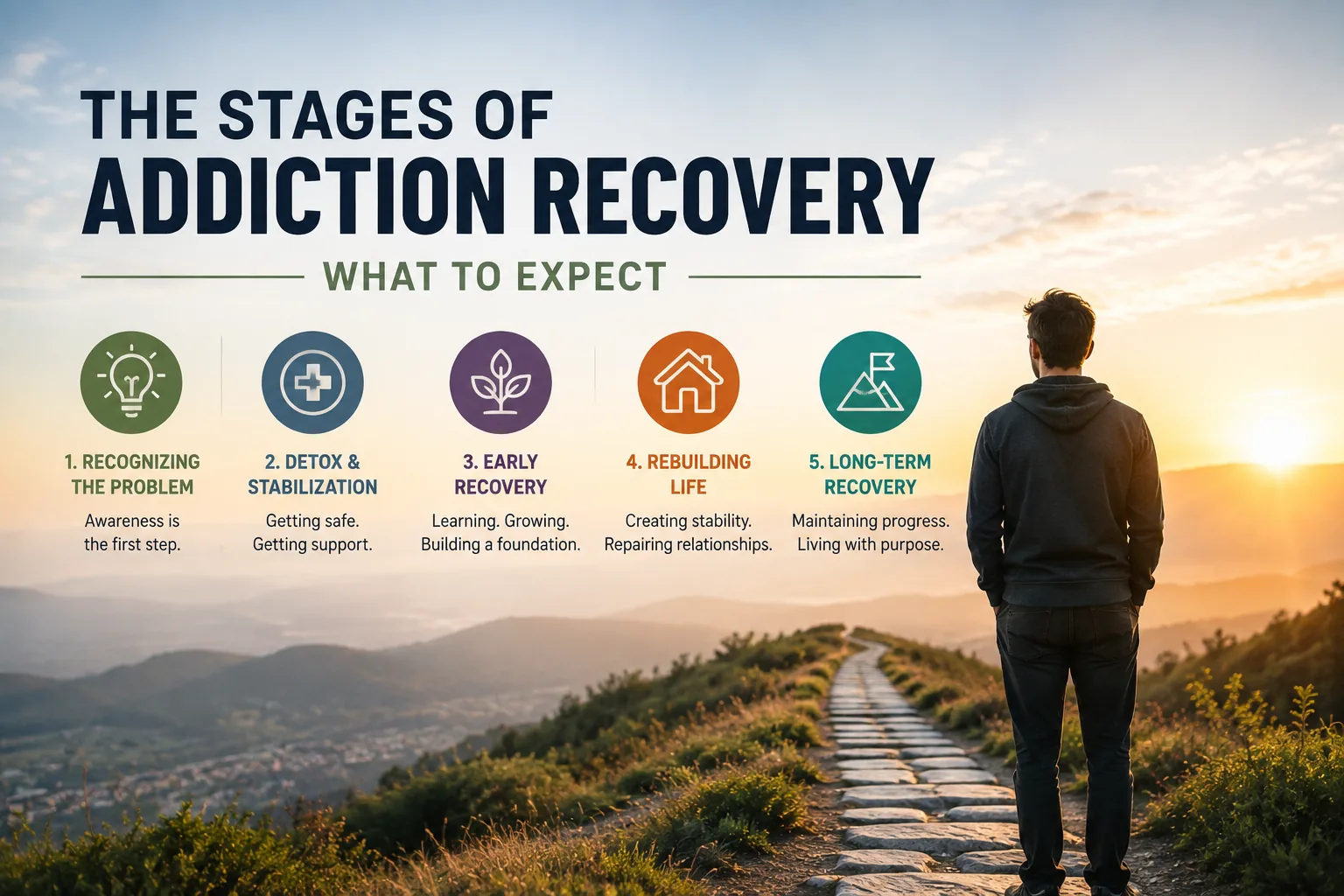


The stages of addiction recovery can look different for everyone, but most people move through a series of common changes as they stop using drugs or alcohol and begin rebuilding their lives. Knowing what to expect in recovery can make the process feel less overwhelming and help people recognize that discomfort, uncertainty, and emotional ups and downs are often part of healing.
Recovery is not usually one dramatic moment. It is a process.
For some people, it begins with detox. For others, it starts after a frightening consequence, a conversation with family, an intervention, or simply the realization that life cannot continue the same way.
The important thing to understand is that recovery changes over time. What someone needs during the first few days may be very different from what they need six months or five years later.
Stage 1: Recognizing the Problem and Considering Change
Before recovery begins, a person first has to recognize that substance use is causing problems.
This can be difficult.
Addiction often involves denial, minimizing consequences, or believing that things are still under control. Someone may recognize problems at work, at home, financially, physically, or emotionally but still struggle to connect those problems to alcohol or drug use.
This stage may include thoughts such as:
“Maybe I need to slow down.”
“I don’t want to live like this anymore.”
“I think I need help.”
Family members may notice the problem long before the person using substances is ready to admit it. In some situations, an addiction intervention may help someone understand how their substance use is affecting the people around them.
The goal during this stage is not perfection. It is movement toward honesty.
Stage 2: Detox and Early Stabilization
Once someone decides to stop using substances, the next stage may involve withdrawal and physical stabilization.
Depending on the substance, withdrawal can range from uncomfortable to dangerous. Alcohol, benzodiazepines, opioids, and other drugs can produce significant withdrawal symptoms. Some people may need medical detox to safely manage symptoms and complications.
During this stage, the focus is often very simple:
Stay safe. Get through today. Begin healing.
Sleep may be poor. Anxiety can increase. Emotions may feel intense. Cravings may come and go. Some people feel exhausted, while others feel restless.
This is why professional support can be so important during the beginning of recovery.
Detox, however, is only the first step.
Removing the substance from the body does not automatically address the behaviors, triggers, mental health problems, or life circumstances that contributed to addiction.
That work often begins in the next stage.
Stage 3: Early Recovery and Learning How to Live Sober
Early addiction recovery can be one of the most challenging and important stages.
A person may attend residential treatment, outpatient treatment, counseling, peer-support meetings, medication management, or sober living. The goal is to begin developing the skills needed to function without returning to substance use.
This may involve learning how to:
- Identify addiction triggers
- Manage cravings
- Handle stress without substances
- Create healthy routines
- Avoid high-risk situations
- Communicate honestly
- Build a sober support network
- Recognize relapse warning signs
Daily life can feel strange during this period.
Activities that once involved drinking or drugs may need to change. Friendships may change. Free time can feel uncomfortable. Emotions that were numbed by substances may suddenly feel much stronger.
This stage is often where people begin building a relapse prevention plan and discovering which recovery tools actually work for them.
Stage 4: Rebuilding Life in Recovery
As recovery becomes more stable, the focus often shifts.
Instead of spending every day thinking about how not to use, people may begin asking how they want to live.
This is the rebuilding stage.
Relationships may begin healing. Someone may return to work or school, repair finances, improve physical health, reconnect with family, or discover new interests.
Trust may take longer to rebuild than expected.
Family members may still worry when someone comes home late or does not answer the phone. Employers may need time to see consistent behavior. Financial consequences from active addiction may take months or years to repair.
Recovery does not erase the past.
It creates an opportunity to build something different.
This stage can also bring unexpected challenges. When life begins improving, some people become less connected to their recovery support system. Meetings may become less frequent. Counseling appointments may feel less necessary.
That can sometimes create vulnerability.
Long-term recovery involves continuing to use the tools that helped create stability, even when life is going well.
Stage 5: Long-Term Recovery and Continued Growth
There is no point where someone suddenly graduates from addiction recovery.
Instead, recovery often becomes part of everyday life.
In long-term recovery, cravings may become less frequent or intense. Healthy habits may feel more natural. Relationships may become stronger. Life may begin to feel less focused on addiction and more focused on family, work, purpose, hobbies, and personal goals.
But challenges still happen.
Grief, stress, relationship problems, illness, loneliness, major life changes, or unexpected triggers can increase vulnerability to relapse.
This is why ongoing recovery support matters.
Some people continue attending recovery meetings for decades. Others stay connected through counseling, faith communities, peer support, recovery groups, alumni programs, or sober friendships.
There is no single correct path.
The goal is to build a life that supports continued recovery.
Recovery Is Progress, Not Perfection
The stages of addiction recovery are not always perfectly organized.
Someone may move forward, struggle, and then need additional support. A lapse or relapse may occur. That does not mean all previous progress is gone.
It means something needs attention.
Recovery often requires adjusting treatment, reconnecting with support, identifying new triggers, or returning to a higher level of care.
What matters most is continuing forward.
In the beginning, recovery may simply mean getting through one day without using.
Later, it may mean repairing relationships, creating stability, helping other people, discovering purpose, and enjoying a life that once seemed impossible.
Recovery changes.
People change.
And with the right treatment, support, and commitment, life can change too.


