





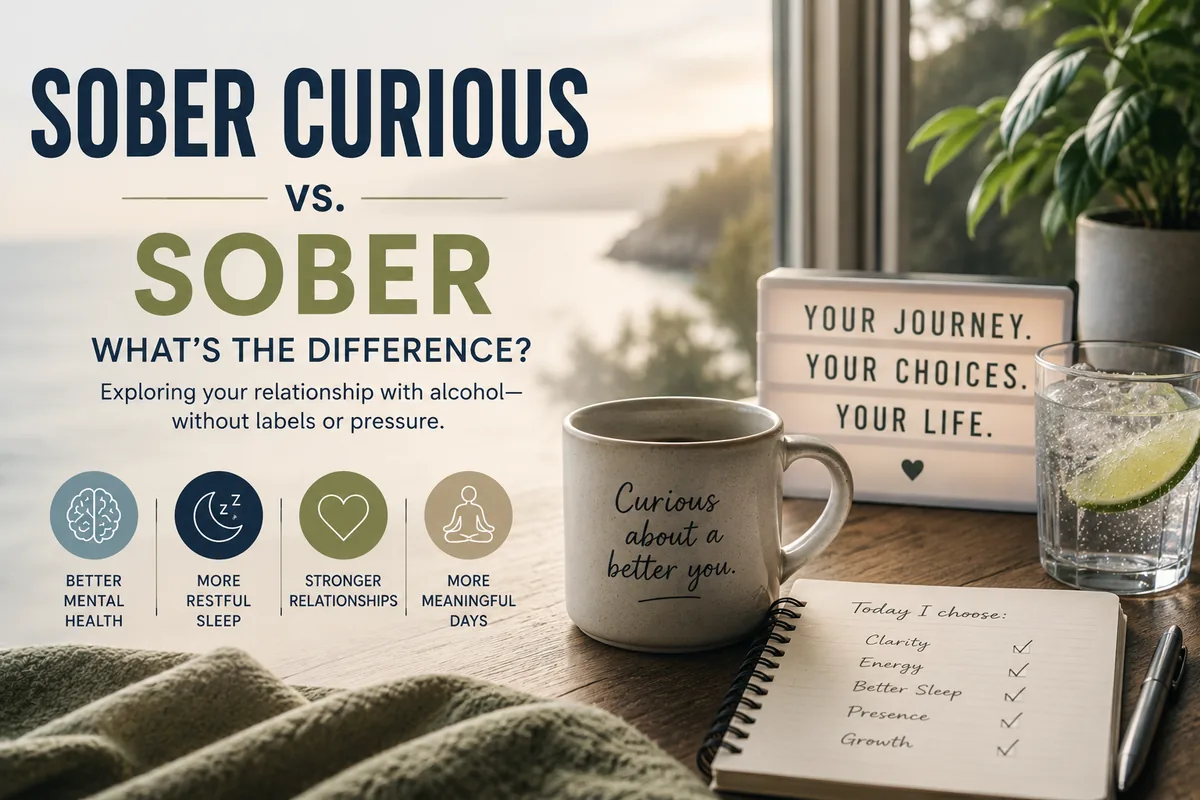
The sober curious movement gives people permission to question alcohol without first deciding that they have an addiction. You might enjoy drinking but dislike the anxiety, poor sleep, expense, or lost weekends that sometimes follow. You may simply wonder whether life would feel better with less alcohol. When comparing sober curious vs sobriety, the main difference is usually intention: sober curiosity involves exploring your relationship with alcohol, while sobriety generally means choosing not to drink.
Neither path requires shame. Both can begin with one honest question: Is alcohol still adding more to my life than it takes away?
Why More People Are Questioning Alcohol
Choosing not to drink is becoming more common. In 2025, Gallup reported that 54% of American adults said they drank alcohol—the lowest percentage recorded in its nearly 90-year trend. The figure fell from 62% in 2023 and 58% in 2024. Gallup also found that 53% of Americans believed moderate drinking was harmful to health, marking the first time a majority held that view.
That change does not mean everyone suddenly identifies as sober. Many people are drinking less, taking alcohol-free months, choosing nonalcoholic drinks, or becoming more selective about when they drink.
Health concerns are part of the shift. The CDC says drinking less may improve well-being while lowering the risk of injuries, cancer, liver and heart disease, depression, anxiety, memory problems, and poor performance at work or school. Even a small change can make a meaningful difference.
What Does Sober Curious Mean?
Being sober curious means intentionally examining the role alcohol plays in your life. It is not a medical diagnosis, and it does not require a permanent promise.
A sober-curious person might:
- Take a 30-day break from alcohol
- Stop drinking on weeknights
- Attend events without drinking
- Try alcohol-free beer, wine, or cocktails
- Track sleep, mood, spending, and energy
- Ask why certain situations trigger the urge to drink
- Decide whether alcohol still supports their goals
The point is not to prove that alcohol is “bad.” It is to notice what happens when it is removed.
Someone might discover that they sleep better, feel less anxious, exercise more consistently, or communicate more clearly. Another person may realize that social events feel uncomfortable without alcohol. That discomfort can reveal how much drinking has become tied to stress relief, confidence, loneliness, or belonging.
Sober curiosity allows room for experimentation. Some people eventually return to occasional drinking with clearer boundaries. Others decide they prefer life without alcohol.
Sober Curious vs. Sobriety
The distinction between sober curious vs sobriety is not always sharp, but the terms usually describe different levels of commitment.
Sober curiosity is flexible. A person may reduce drinking, take breaks, or test alcohol-free living without committing to lifelong abstinence. The focus is awareness, choice, and personal growth.
Sobriety typically means abstaining from alcohol. For some people, it is a lifestyle choice. For others, it is an important part of recovery from alcohol use disorder. Sobriety may include counseling, medications, mutual-support groups, recovery meetings, medical care, or a structured treatment program.
Alcohol use disorder is defined by an impaired ability to stop or control drinking despite negative social, work, or health consequences. It can be mild, moderate, or severe. Evidence-based treatment can include behavioral care, mutual-support groups, and nonaddictive medications.
A sober-curious challenge can be helpful, but it is not a substitute for treatment when someone is experiencing addiction or dangerous withdrawal.
How to Know Whether Drinking Is Becoming a Problem
You do not need to hit “rock bottom” before changing your relationship with alcohol. In fact, questioning your drinking early may help prevent more serious problems.
Consider whether you regularly:
- Drink more or longer than planned
- Try to cut down but cannot
- Experience strong cravings
- Need more alcohol to feel the same effect
- Miss responsibilities because of drinking
- Continue drinking despite anxiety, depression, or relationship problems
- Experience blackouts
- Feel shaky, sweaty, nauseated, restless, or unable to sleep when alcohol wears off
Doctors may diagnose alcohol use disorder when two or more recognized symptoms occur within a 12-month period. Even a couple of symptoms can signal that it is worth speaking with a healthcare professional.
People who drink heavily every day should not suddenly stop without medical advice. Alcohol withdrawal can cause seizures, hallucinations, severe confusion, and other life-threatening complications. A clinician can determine whether supervised detox is needed.
How to Begin a Sober-Curious Experiment
Start with a clear period, such as two weeks or 30 days. Remove alcohol from your home and tell at least one supportive person what you are doing. Plan alternative drinks before parties, dinners, or stressful evenings.
Pay attention to more than whether you “succeeded.” Track your sleep, anxiety, mood, digestion, relationships, productivity, and spending. Notice when cravings appear and what was happening immediately beforehand.
You may also need new ways to meet the need alcohol was filling. Exercise, therapy, hobbies, meditation, social support, and alcohol-free events can make the change feel like an addition rather than a punishment.
At the end of the experiment, review what you learned. You may choose moderation, another alcohol-free period, or ongoing sobriety. There is no award for selecting the perfect label.
Being sober curious is not about waiting until your drinking becomes disastrous. It is about becoming interested in your own life without alcohol. Whether the next step is drinking less, seeking treatment, or choosing sobriety, questioning an old habit can be the beginning of a healthier future.


