





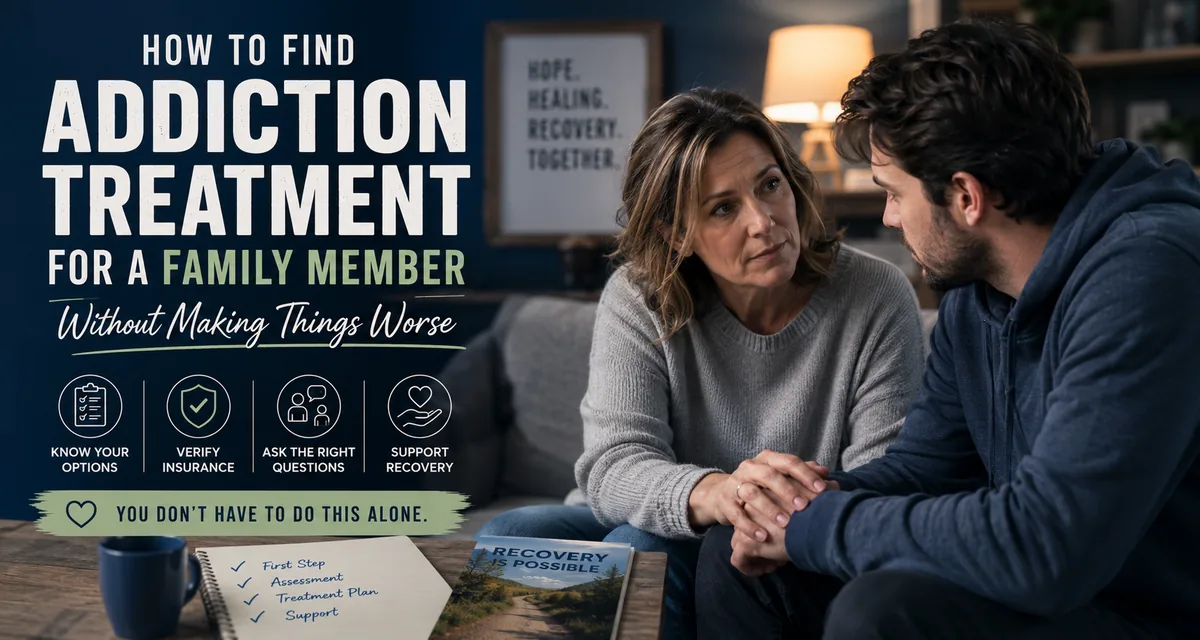
Learning how to find addiction treatment for someone you love can feel urgent and overwhelming. You may be afraid of an overdose, another arrest, lost job, damaged relationship, or medical emergency. At the same time, pushing too hard can make your family member defensive or unwilling to talk. The best help for family of an addict begins with calm preparation: understand the available treatment levels, verify insurance yourself, compare programs carefully, and speak with concern rather than shame.
SAMHSA’s June 2026 family guide emphasizes that recovery affects the entire family and that relatives need reliable information, support, and realistic expectations while navigating care.
Start With Safety, Not an Argument
Choose a time when your family member is as sober, calm, and medically stable as possible. Avoid beginning the conversation during intoxication, withdrawal, or a heated conflict.
Describe specific changes you have noticed instead of using labels. You might say, “I’ve noticed you are missing work, borrowing money, and falling asleep unexpectedly. I’m worried about your safety.” Avoid debating whether the person is “really an addict.” The immediate goal is to open a door to assessment, not win an argument.
Offer a manageable next step, such as calling a treatment center together or scheduling an evaluation. Whenever possible, include the person in decisions about location, medications, family involvement, and recovery goals. Treatment is more likely to feel supportive when it is done with someone rather than to them.
Call 911 when there is an overdose, seizure, severe confusion, chest pain, difficulty breathing, violent behavior, or an inability to wake the person. Call or text 988 when there is an immediate suicide or mental health crisis. Treatment research can wait until the crisis is stabilized.
Understand the Different Levels of Addiction Treatment
The right setting depends on the substance involved, withdrawal risk, physical and mental health, home environment, and previous treatment history. A qualified professional should complete an assessment before recommending placement.
Withdrawal management or detox provides medical monitoring while alcohol or drugs leave the body. Alcohol and benzodiazepine withdrawal can become life-threatening. Opioid withdrawal is usually not fatal by itself, but dehydration, relapse, and overdose risk can make medical support important. Detox alone is not complete addiction treatment; it should connect directly to continuing care.
Hospital or medically managed inpatient care is generally intended for people with severe withdrawal, overdose complications, unstable medical problems, psychosis, or significant suicide risk.
Residential treatment provides 24-hour structure while the person lives at the facility. It may be appropriate when the home environment is unsafe, previous outpatient treatment has not worked, or the person needs separation from substances and triggers.
Partial hospitalization programs, often called PHPs, provide treatment for much of the day while the patient sleeps at home or in supportive housing. Intensive outpatient programs, or IOPs, usually meet several days per week for multiple hours.
Standard outpatient treatment may include medical appointments, counseling, medications, drug testing, peer support, and family services while the person continues working or attending school. Quality care may also include FDA-approved medications for alcohol or opioid use disorder.
A higher level of care is not automatically better. The goal is to choose the least restrictive setting that can safely meet the person’s needs.
Verify Insurance Before Agreeing to Admission
Do not rely only on a facility saying that it “accepts” your insurance. That phrase can simply mean the center will submit a claim, not that it is in-network or fully covered.
Call the number on the insurance card and ask:
- Is this facility and each treating provider in-network?
- Is prior authorization required?
- Which treatment levels are covered?
- Is medical detox covered separately from residential care?
- What are the deductible, copay, coinsurance, and out-of-pocket maximum?
- Are medications, laboratory tests, psychiatric visits, and transportation included?
- How many days or visits are initially authorized?
- What happens if continued care is denied?
- Is a single-case agreement available when no appropriate in-network program exists?
Ask for a reference number and request the answers in writing. CMS recommends confirming network status with both the insurer and provider before receiving planned care. FindTreatment.gov also advises families to ask detailed payment questions and use in-network options when possible to reduce unexpected costs.
Never provide a credit card or sign a large financial agreement until you receive a written explanation of charges, refund rules, and personal responsibility.
Questions to Ask Every Treatment Center
Ask whether the facility is licensed by the state and accredited by a recognized organization. Confirm that clinicians are credentialed and experienced with the specific substance, age group, and mental health conditions involved.
Additional questions should include:
- How is the recommended level of care determined?
- Which evidence-based therapies are offered?
- Are medications for opioid or alcohol use disorder available?
- How are depression, trauma, anxiety, psychosis, or eating disorders treated?
- Is medical care available around the clock?
- How often will the patient meet with a licensed clinician?
- How are families included with the patient’s permission?
- What happens after discharge?
- How does the program respond to relapse?
- Can the facility provide outcome information without promising a cure?
SAMHSA identifies licensing, accreditation, evidence-based practices, appropriate medications, family involvement, and long-term recovery support as important signs of quality care.
Common Red Flags and How Families Can Help
Be cautious when a center pressures you to admit someone immediately before completing a clinical assessment. Other warning signs include guaranteed success rates, unclear staff credentials, refusal to discuss medications, large unexplained fees, offers of free travel or gifts, and promises that one short stay will permanently cure addiction.
A program should not shame patients, discourage all contact with supportive relatives, or treat relapse as automatic failure. It should have a clear emergency plan, written patient rights, individualized treatment, and a discharge plan.
Families also need support. You can set boundaries without abandoning the person. A boundary might mean refusing to provide cash, cover up missed responsibilities, or allow substance use in your home. Family counseling and peer groups can help you remain compassionate without being pulled into every crisis.
Finding treatment does not mean controlling every outcome. It means creating a safe path toward professional care, offering practical help, and protecting your own health. Recovery may involve several attempts or different levels of treatment. A setback does not mean treatment was pointless.
Use FindTreatment.gov or call SAMHSA’s National Helpline at 1-800-662-HELP (4357) to locate programs. The right first step is not the most expensive facility or the farthest one from home. It is an honest assessment followed by licensed, evidence-based care that fits the person’s medical needs and gives the whole family a chance to recover.


