





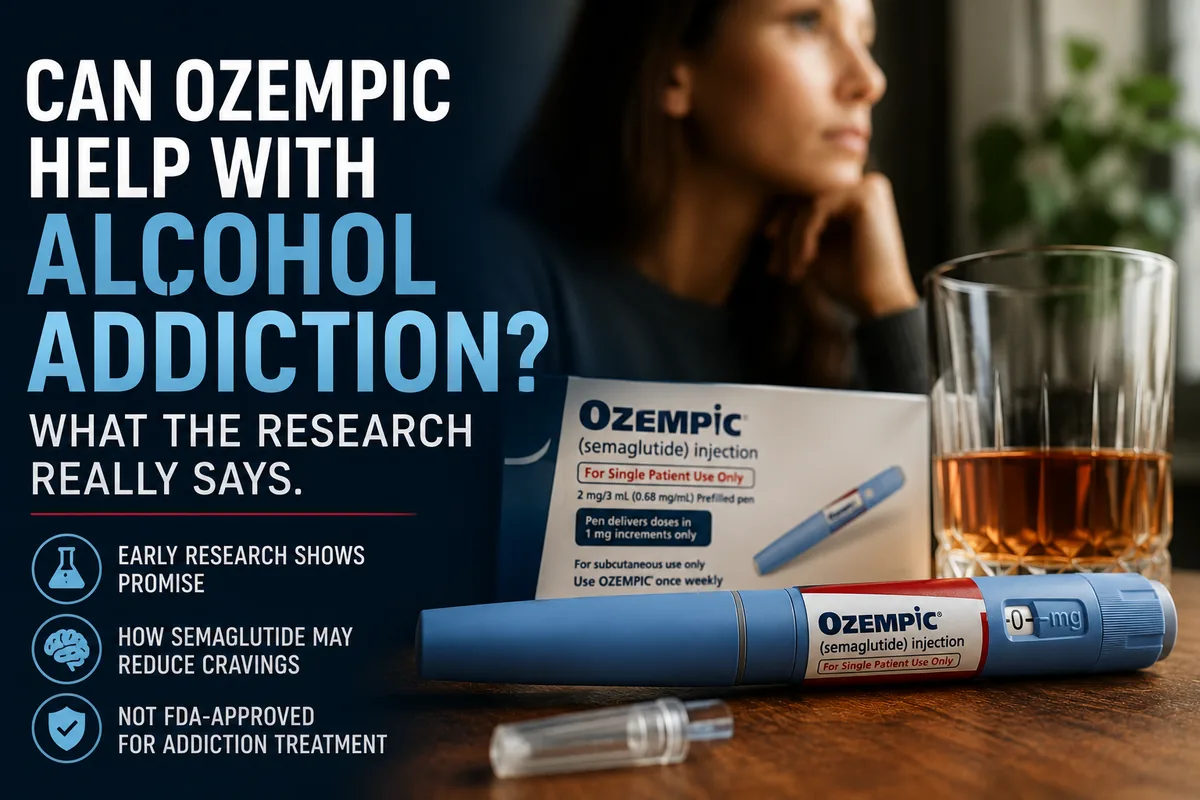
Ozempic and alcohol addiction have become a major topic online. Some people taking semaglutide say they suddenly lost interest in drinking, while social-media posts describe the medication as a cure for alcohol use disorder. The truth is more careful. Early studies suggest semaglutide alcohol cravings and heavy-drinking days may decrease for some people. However, Ozempic is not approved by the FDA to treat alcohol addiction, and researchers do not yet know who benefits most, what dose works best, or how long the effect lasts.
What Are Ozempic and Semaglutide?
Ozempic is a brand-name form of semaglutide, a GLP-1 receptor agonist. The FDA approves Ozempic for certain uses in adults with type 2 diabetes, including improving blood sugar and reducing specific heart and kidney risks. Alcohol use disorder is not listed as an approved use.
GLP-1 medicines copy the action of a hormone involved in appetite, digestion, and blood-sugar control. They can also affect brain systems linked to reward and motivation. Because food, alcohol, and other addictive substances can activate some of the same reward pathways, researchers have asked whether GLP-1 drugs might make alcohol feel less rewarding or reduce the urge to drink.
What Research Says About Ozempic and Alcohol Addiction
The first major human evidence was encouraging but small. A 2025 randomized clinical trial included 48 adults with alcohol use disorder who were not actively seeking treatment. Participants received low-dose semaglutide or a placebo for about nine weeks.
Compared with placebo, semaglutide reduced the amount of alcohol participants drank during a laboratory session. It also reduced drinks per drinking day, weekly alcohol cravings, and heavy-drinking days over time. However, it did not significantly reduce the total number of drinking days or average drinks per calendar day. That mixed result is important: the drug appeared to change how much people drank when they drank, but it did not make everyone stop drinking.
A larger study published in 2026 added stronger evidence. Researchers enrolled 108 treatment-seeking adults who had both alcohol use disorder and obesity. Participants received semaglutide or a placebo for 26 weeks, and both groups were offered cognitive behavioral therapy. Heavy-drinking days fell in both groups, but the decrease was greater with semaglutide. The semaglutide group also had larger reductions in total monthly alcohol intake, drinks per drinking day, cravings, and harmful-drinking scores.
These findings are hopeful. They also do not prove that Ozempic is ready to become a standard addiction medication. The newer trial involved people with obesity and included therapy, so researchers cannot assume the same results will occur in people without obesity or when semaglutide is used alone. The study’s authors called for more clinical trials.
Why Social-Media Claims Go Too Far
Personal stories can point scientists toward useful questions, but they cannot prove that a treatment works. Someone may drink less after starting Ozempic because cravings changed. They may also drink less because nausea, reduced appetite, weight-loss goals, lifestyle changes, or medical advice changed their behavior.
Research based on medical records has found lower rates of alcohol use disorder diagnoses or relapse among people prescribed semaglutide. These studies support the same hopeful signal, but they show an association rather than proving that semaglutide caused the change. People prescribed GLP-1 medications may differ from other patients in their health, medical care, or motivation.
It is also misleading to call Ozempic a cure. Alcohol use disorder is a medical condition involving difficulty stopping or controlling drinking despite harmful consequences. Treatment may need to address brain changes, behavior, stress, mental health, relationships, and a person’s living environment.
Risks and Established Treatment Options
Ozempic can cause nausea, vomiting, diarrhea, constipation, and stomach pain. Its FDA label also warns about pancreatitis, gallbladder disease, severe digestive problems, dehydration-related kidney injury, and a possible risk of thyroid C-cell tumors. A person should never borrow another person’s injection or buy semaglutide from an unlicensed source.
There are already three FDA-approved medications for alcohol use disorder: naltrexone, acamprosate, and disulfiram. Behavioral treatment, mutual-support groups, and structured recovery programs can also help. The right approach depends on the person’s drinking pattern, health, goals, and other medications.
People who have been drinking heavily for a long time should not suddenly stop without medical guidance. Alcohol withdrawal can cause nausea, a rapid heart rate, seizures, and other potentially life-threatening problems. Semaglutide is not a treatment for acute alcohol withdrawal.
The Bottom Line on Semaglutide Alcohol Cravings
The research on Ozempic and alcohol addiction is no longer based only on animal studies or online stories. Two randomized trials now suggest semaglutide may reduce cravings, drinks per drinking day, and heavy-drinking days, especially when combined with behavioral care. That is real progress.
Still, semaglutide remains an experimental, off-label approach for alcohol use disorder. It should not replace proven treatment, and no one should start, stop, or change an Ozempic prescription to manage drinking without speaking to a qualified healthcare professional.
Hope is justified, but hype is not. The most accurate message today is that semaglutide may eventually become another tool for alcohol addiction treatment. More research is needed before doctors know when, how, and for whom that tool should be used.


