





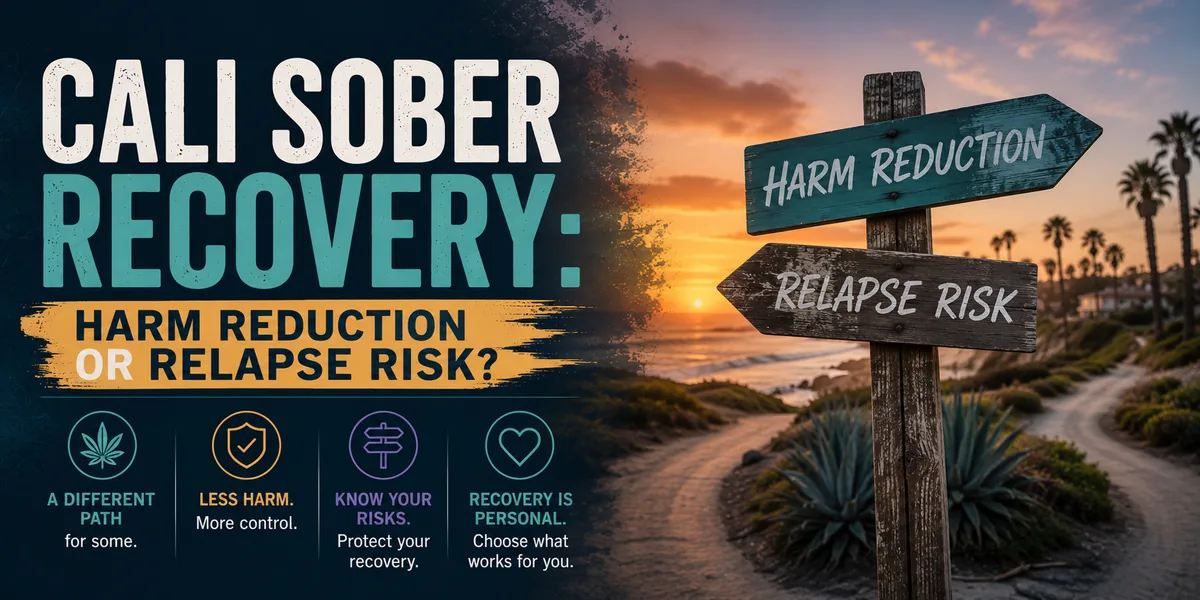
“Cali sober” generally describes avoiding alcohol and harder drugs while continuing to use cannabis. Some people use the term more loosely and include occasional psychedelic use. It is not a medical diagnosis, a standardized treatment plan, or an officially defined form of recovery.
For one person, California sober recovery may represent a major reduction in harm. Replacing daily drinking, fentanyl, or methamphetamine use with occasional cannabis could reduce immediate risks. For another person, cannabis may become a new addiction, reactivate old habits, or make returning to alcohol or other drugs more likely.
The important question is not whether Cali sober is universally good or bad. It is whether the approach is improving that individual’s health, safety, stability, and ability to control substance use.
What Does Cali Sober Mean?
Most people who identify as Cali sober have stopped using the substance that caused the greatest harm while continuing cannabis. Someone recovering from alcohol use disorder might stop drinking but use marijuana at night. A person who previously used opioids may continue cannabis for sleep, anxiety, pain, or cravings.
This approach fits within the broader idea of harm reduction. Harm reduction focuses on reducing death, disease, injury, and other harmful consequences even when a person is not ready or willing to stop every substance. SAMHSA recognizes that harm-reduction and recovery services can support overlapping populations rather than existing as opposing philosophies.
That does not mean every form of substance substitution is evidence-based treatment. Cannabis is not FDA-approved to treat alcohol use disorder, opioid use disorder, or stimulant addiction. Proven treatments should not be replaced with marijuana simply because it feels more natural or socially acceptable.
Medications including buprenorphine, methadone, and naltrexone can treat opioid use disorder. Alcohol use disorder can be treated with medications such as naltrexone, acamprosate, and disulfiram, along with behavioral care and recovery support.
When Cali Sober May Function as Harm Reduction
The approach may represent real progress when it produces measurable improvements.
A person might stop experiencing alcohol blackouts, opioid overdoses, dangerous withdrawal, arrests, missed work, or serious family conflict. They may become more stable, attend medical appointments, repair relationships, and stop using substances connected to an immediate risk of death.
NIAAA’s definition of alcohol recovery does not require complete abstinence in every case. Recovery involves remission from alcohol use disorder and stopping heavy drinking. However, abstinence remains the safest option and is often more stable for people with severe alcohol problems.
There is also early research examining whether cannabis can affect alcohol use. A recent controlled laboratory trial found that participants drank less alcohol immediately after using THC than after receiving a placebo. However, the researchers emphasized that the study did not establish cannabis as an alcohol treatment, and its long-term effects remain unknown.
That distinction matters. Drinking less during a short laboratory session is not the same as maintaining recovery for months or years.
Someone considering a Cali sober approach should measure more than whether they stopped their original drug. Useful questions include:
- Is cannabis use increasing over time?
- Am I keeping commitments and functioning better?
- Can I comfortably take days off?
- Am I driving or working while impaired?
- Is my mental health improving?
- Am I using cannabis to avoid every uncomfortable emotion?
- Have cravings for alcohol or other drugs decreased or increased?
Harm reduction should reduce harm. When the overall pattern becomes safer and more stable, that progress deserves recognition.
When Cannabis Can Increase Relapse Risk
Cali sober recovery may be risky when cannabis acts as a trigger rather than a substitute.
The smell, ritual, people, places, or impaired feeling associated with marijuana may remind someone of previous substance use. Lowered judgment can also make it easier to contact an old dealer, accept a drink, or return to another drug.
In one longitudinal study of California sober-living residents, cannabis use was associated with an increased risk of alcohol and other drug use and related problems. The researchers concluded that cannabis did not appear to work as an effective substitute in that particular recovery population. That finding does not apply equally to everyone, but it shows why caution is warranted.
Cannabis itself can also become addictive. The CDC estimates that approximately three in ten people who use cannabis develop cannabis use disorder. Risk is greater among people who begin young, use frequently, or consume high-potency products such as concentrates and dabs.
Warning signs include:
- Needing more THC to experience the same effect
- Trying and failing to reduce use
- Strong cravings or daily preoccupation
- Giving up activities in favor of cannabis
- Using despite anxiety, paranoia, relationship problems, or poor performance
- Feeling irritable, restless, or unable to sleep when stopping
A person who stopped drinking but now needs cannabis throughout the day may have changed substances without resolving the underlying compulsive behavior.
Cannabis may be especially risky for people with a history of psychosis, severe paranoia, cannabis use disorder, or repeated relapses that begin with marijuana. Frequent cannabis use has been linked with a higher risk of psychosis or schizophrenia in some users.
Abstinence Is Not the Only Measure of Progress
Recovery is personal, but it should not be vague. SAMHSA describes recovery as a process of improving health and wellness, living a self-directed life, and working toward one’s potential. Its guidance includes abstaining from alcohol, illicit drugs, and non-prescribed medications when someone has an addiction problem, while also emphasizing informed choices and overall well-being.
Some mutual-support groups and sober-living homes define sobriety as abstinence from all intoxicating substances. A person using cannabis may therefore be considered outside the program’s rules even if they have stopped alcohol or opioids. That is not necessarily a moral judgment; it may reflect the structure that particular community uses to protect residents.
People should be honest with doctors, therapists, sponsors, and recovery supports about cannabis use. Hiding it makes it harder to identify whether it is helping, causing harm, or interfering with medications and treatment.
How to Decide Whether Cali Sober Is Working
A personalized recovery plan should consider the person’s primary substance, addiction severity, overdose history, mental health, medications, goals, and prior experiences with cannabis.
Abstinence may be the safer choice when cannabis repeatedly leads back to alcohol or other drugs, becomes compulsive, worsens mental health, or violates housing, treatment, probation, or workplace requirements.
A harm-reduction approach may still be meaningful when a person is not ready for complete abstinence but is making clear improvements. Treatment should build on that progress instead of using shame.
Relapse or a return to heavy use should also be treated as a signal to adjust the plan—not proof that recovery is impossible. NIAAA emphasizes that setbacks are common and that people benefit from quickly reconnecting with treatment, coping strategies, medication, and supportive relationships.
Cali sober can be harm reduction for some people and a relapse risk for others. The label matters less than the results. A recovery plan is working when it produces greater safety, control, health, honesty, and connection—and when it can be changed if those improvements begin to disappear.


