



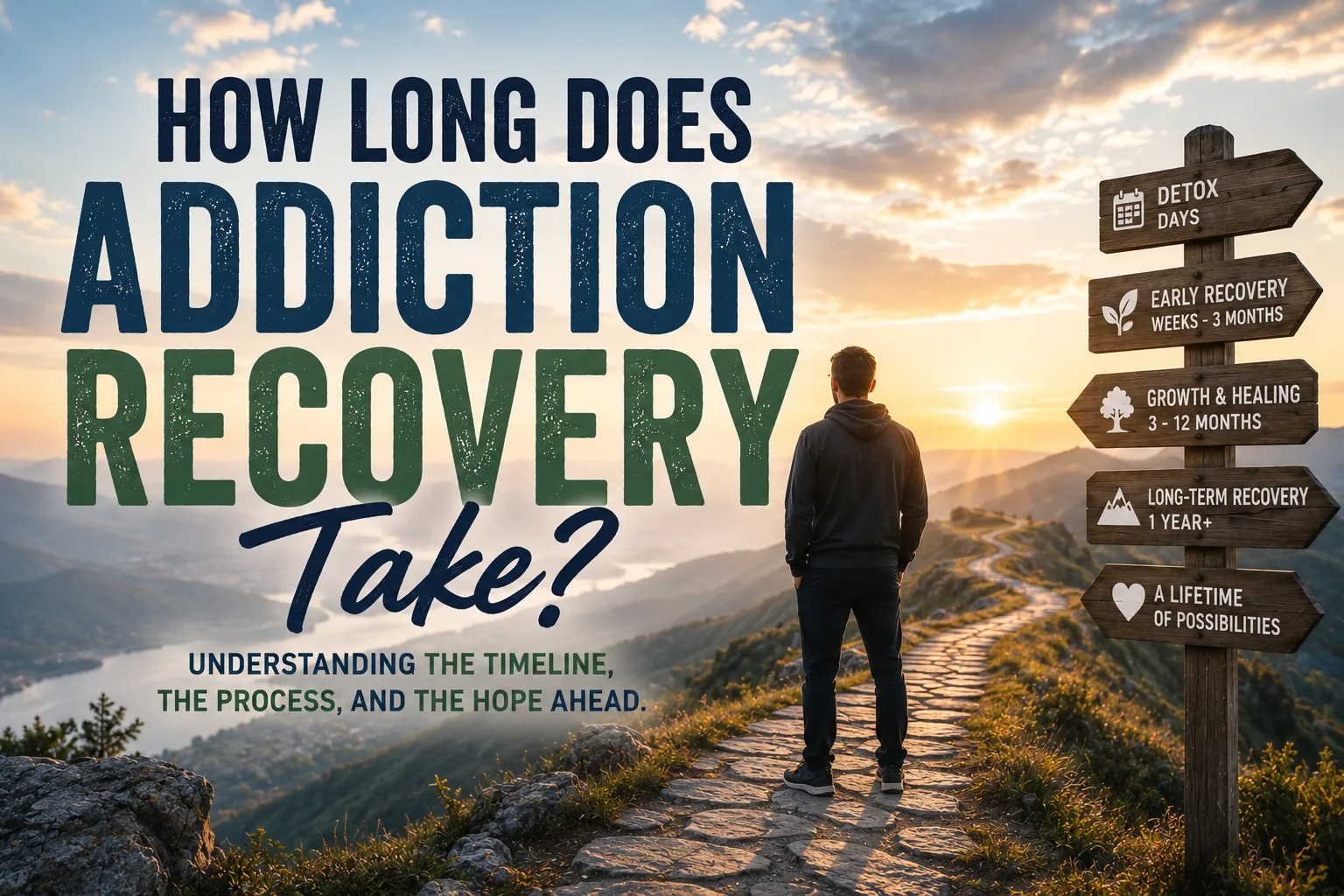


How long does addiction recovery take? It is one of the first questions many people ask when they decide to stop using drugs or alcohol. The answer is not as simple as a number of days, weeks, or months. Addiction recovery is a process, and the timeline can depend on the substance used, how long someone has been using, physical and mental health, support systems, treatment, and what life looks like after substance use stops.
Some parts of recovery can happen quickly. Withdrawal may improve within days. Sleep and appetite may begin changing within weeks. Other parts—such as rebuilding trust, learning new coping skills, improving mental health, and creating a stable life—can take much longer.
There is no deadline for recovery.
The better question may be: What can I expect at each stage of addiction recovery?
The First Days: Detox and Withdrawal
For many people, recovery begins with getting the substance out of the body.
This period is often called detox.
Withdrawal symptoms vary depending on the drug, amount used, frequency of use, and individual health. Symptoms may include anxiety, sweating, nausea, insomnia, irritability, shaking, cravings, or changes in mood.
Some withdrawal syndromes can also be dangerous.
Alcohol and benzodiazepine withdrawal, in particular, may cause serious complications and should not always be attempted alone. Medical detox can provide monitoring, medications, and support when necessary.
Detox may last several days or longer, but finishing detox does not mean addiction treatment is complete.
It means the physical withdrawal process has begun to settle.
The behavioral and emotional work of recovery is usually just starting.
The First 30 to 90 Days of Recovery
The first few months can be a major adjustment.
During early recovery, people are learning how to get through everyday life without relying on drugs or alcohol.
That can be harder than expected.
Sleep may still feel irregular. Emotions can be intense. Cravings may appear suddenly. Someone may feel energized one day and exhausted the next.
This period is often focused on creating stability.
Treatment may include residential rehab, outpatient programs, counseling, medication, recovery meetings, or sober living.
People begin learning how to identify addiction triggers, manage cravings, establish healthy routines, and recognize relapse warning signs.
The first 90 days can also reveal problems that were hidden during active addiction.
Relationships may need repair.
Debt may need attention.
Mental health symptoms may become clearer.
Someone may realize that stopping substance use was only one part of what needed to change.
That is normal.
Recovery involves learning how to live differently, not simply learning how not to use.
What Happens After Six Months to One Year?
As recovery becomes more established, many people begin focusing less on surviving each day and more on rebuilding life after addiction.
Work may become more stable.
Relationships may begin improving.
Sleep and routines may feel more natural.
People often discover hobbies, friendships, goals, or interests that have nothing to do with substance use.
But this stage can bring new risks.
When life improves, someone may begin thinking:
“I’ve got this now.”
They may stop attending meetings, counseling, or other forms of support that helped them during early recovery.
This is why continued support can remain important even when someone feels much better.
Recovery is not only about knowing how to handle a crisis.
It is also about maintaining healthy habits when things are going well.
For many people, the first year of recovery is a period of major growth. However, it is not a finish line.
How Long Does the Brain Take to Recover From Addiction?
The brain does not necessarily return to normal the moment substance use stops.
Long-term alcohol or drug use can affect reward, motivation, stress response, memory, decision-making, and impulse control.
Healing can continue over time.
Some people notice improvements in sleep, concentration, mood, or motivation within weeks. Other changes may take months or longer.
The timeline is different for everyone.
Mental health conditions can also influence recovery. Depression, anxiety, trauma, ADHD, or other conditions may have existed before addiction or may become more noticeable after substance use stops.
Treating these conditions can be an important part of long-term addiction recovery.
Recovery should not be viewed as waiting for your brain to suddenly become “fixed.”
It is an active process of building healthier routines and giving the brain and body an environment where healing can continue.
When Does Recovery Become Long-Term Recovery?
There is no official day when early recovery suddenly becomes long-term recovery.
For some people, reaching one year sober feels like a major turning point.
Others may still feel vulnerable several years later.
Long-term recovery often means that healthy behaviors have become part of everyday life.
Someone knows what their triggers are.
They know who to call when they are struggling.
They have developed ways to handle stress.
They may have repaired relationships, created financial stability, or found a sense of purpose.
Drug or alcohol cravings may become less frequent, but life can still create difficult moments.
Grief happens.
Relationships end.
Jobs change.
People become sick.
Stress does not disappear because someone is sober.
The difference is that recovery provides new ways to respond.
Recovery Does Not Have an Expiration Date
So, how long does addiction recovery take?
For many people, the most intense changes happen during the first weeks and months. Stability often grows throughout the first year. Emotional, physical, social, and financial healing may continue for years.
And some people choose to think of themselves as in recovery for life.
That does not mean they spend every day struggling not to use.
Quite the opposite.
Over time, recovery can become less about addiction and more about living.
A person who once counted every sober hour may eventually become focused on work, family, relationships, health, travel, hobbies, and the future.
The timeline matters less than the direction.
You do not have to rebuild your entire life today.
You only have to keep moving forward.
Recovery can begin with one sober day.
Then another.
Eventually, those days can become something much larger: a life that no longer revolves around addiction.


